NVIDIA GTC Berlin 2026: Jensen Huang’s AI Vision Unveiled
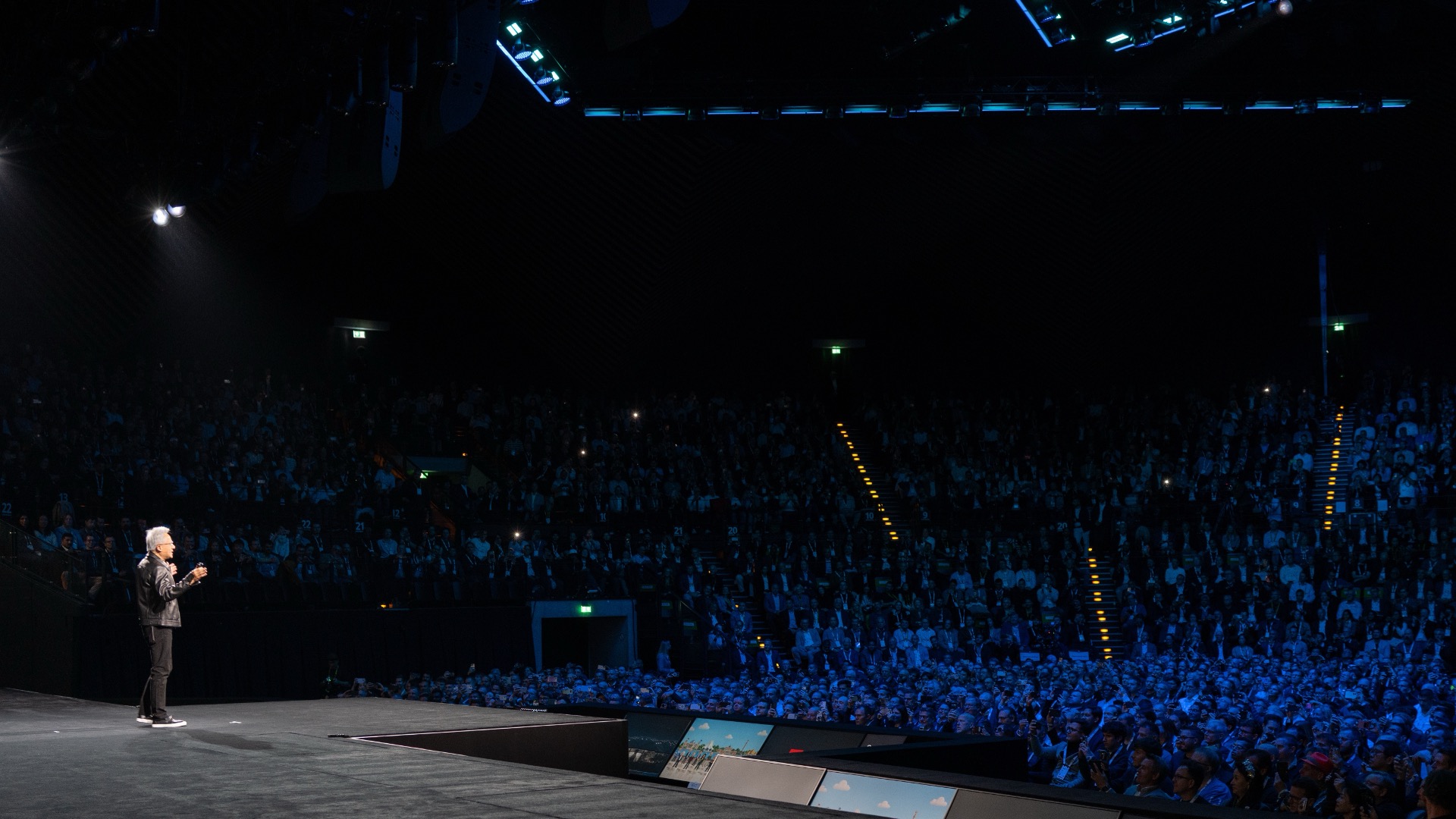
NVIDIA CEO Jensen Huang delivered a landmark keynote at GTC Berlin, announcing a $10 billion European AI investment, a refreshed full‑stack AI factory, and new collaborations with major European brands. The event signals a decisive push to make Europe a core hub for AI production, not just consumption.
- $10 billion investment in European AI infrastructure
- Launch of a modular edge‑ready AI factory form factor
- Introduction of CUDA‑X 2.0 with new domain‑specific libraries
- Open‑source foundation models for collaborative development
- Strategic partnerships with 12,000+ European companies
Introduction
The Tempodrom in Berlin—once a tent near the historic Berlin Wall—has transformed into a high‑tech arena for the AI community. Over three days, GTC Berlin 2026 hosted more than 100 sessions covering agentic AI, robotics, physical AI, open models, and accelerated computing. At the center of the spectacle was NVIDIA founder and CEO Jensen Huang, whose keynote set the tone for the next wave of AI development across Europe.
What Happened
Huang opened with a provocative question: What do L’Oréal, Revolut, Spotify, Merck, Vodafone, Zara, Porsche, Nestlé and HSBC have in common? The answer: they are all European enterprises leveraging NVIDIA’s AI platform. The keynote followed a week‑long European roadshow—Paris, London, Stockholm, Dublin—during which NVIDIA pledged nearly $10 billion to the continent’s AI ecosystem and announced partnerships with over 12,000 local firms.
Key Details
- $10 Billion Commitment – Direct funding for research labs, data centers, and developer programs across EU member states.
- Full‑Stack AI Factory – A refreshed architecture that integrates NVIDIA hardware (H100 GPUs, DGX systems), system software (NVIDIA AI Enterprise), CUDA‑X libraries, and a new generation of foundation models.
- European Partnerships – Joint initiatives with L’Oréal (fashion AI), Revolut (fintech fraud detection), and Porsche (autonomous driving) showcase immediate use‑cases.
- Open‑Model Strategy – NVIDIA unveiled a suite of open‑source models, emphasizing transparency and community co‑development.
- AI Factory Form Factor – A modular, edge‑ready chassis that brings the AI factory to factories, hospitals, and retail floors, reducing latency and data‑privacy concerns.
Technical Analysis
Huang framed AI as a five‑layer cake:
- Energy – Powering advanced compute clusters.
- Hardware – GPUs, Tensor Cores, and NVLink interconnects.
- Infrastructure – High‑speed networking, storage, and the NVIDIA DGX Cloud.
- Models – Foundation models trained on petabyte‑scale datasets.
- Applications – End‑user services integrated via the CUDA‑X ecosystem.
He stressed that infrastructure must precede models, drawing a parallel to the early internet and electricity grids. The new AI factory form factor is designed for edge‑to‑cloud continuity, allowing enterprises to train models centrally and deploy inference locally with sub‑millisecond latency. NVIDIA also announced CUDA‑X 2.0, featuring accelerated libraries for genomics, drug discovery, and real‑time graphics rendering.
Industry Impact
Europe’s AI landscape has historically been consumer‑centric, relying on US‑based cloud services for inference. Huang’s announcement flips that narrative, positioning Europe as a producer of AI. The $10 B commitment will fund:
- Regional AI research hubs in Berlin, Paris, and Milan.
- Talent pipelines through scholarships and NVIDIA‑certified training.
- Startup accelerators focused on AI‑first products.
Competitors such as AMD, Intel, and Google Cloud will feel pressure to match NVIDIA’s investment pace, especially in the EU’s emerging AI‑regulatory framework. The move also aligns with the EU’s Digital‑Europe strategy, potentially unlocking public‑private co‑funding for AI safety and ethics.
Future Implications
Huang’s vision suggests a decentralized AI economy where data sovereignty and low‑latency inference become competitive differentiators. Companies that adopt the NVIDIA AI factory early could achieve 10‑30% faster time‑to‑market for AI‑driven products. Moreover, the open‑model initiative may catalyze a European model‑sharing ecosystem, reducing reliance on proprietary US models and fostering home‑grown innovation.
Conclusion
GTC Berlin 2026 was more than a product showcase; it was a strategic declaration that Europe will be a core engine of the global AI revolution. By coupling massive capital, a full‑stack platform, and deep industry collaborations, NVIDIA aims to shift the continent from AI consumer to AI creator.
Key Takeaways
- NVIDIA commits $10 B to Europe’s AI ecosystem.
- The full‑stack AI factory now includes edge‑ready hardware.
- Open‑source models will accelerate collaborative innovation.
- European brands are early adopters, signaling market demand.
- Competitors must respond to maintain relevance in the EU market.
What this means for your business
For businesses, NVIDIA's latest move is a prompt to act, not just to read. At ThinkSuite we help teams turn shifts like this into results through AI automation, where you can automate repetitive workflows with AI agents and integrations.
- Visibility (GEO platform): track and improve how often AI search engines cite your brand.
- Digital marketing: turn industry shifts into campaigns that bring leads.
Ready to put this into practice? Talk to ThinkSuite for a tailored plan.
Why it matters
For developers, the expanded AI factory means access to a unified stack—from GPUs to libraries—optimised for both cloud and edge workloads. This reduces the engineering overhead of stitching together disparate tools, accelerating prototype cycles and production deployments. Businesses gain a clear pathway to become AI producers rather than mere consumers. With on‑premise inference capabilities, firms can keep sensitive data in‑house, comply with GDPR, and achieve lower latency for mission‑critical applications such as autonomous manufacturing or real‑time fraud detection. For the broader AI industry, NVIDIA’s European push reshapes the competitive landscape. It challenges the dominance of US‑centric cloud providers, encourages regional talent development, and aligns with emerging EU policies on AI ethics and data sovereignty, potentially setting new global standards.
Market impact
The announcement is likely to **inflate NVIDIA’s market valuation** in the short term as investors price in the $10 B European pipeline. Competitors will feel pressure to accelerate their own regional investments, potentially sparking a wave of EU‑focused AI infrastructure funding. Venture capital may shift toward European AI startups that align with NVIDIA’s stack, reshaping the investment landscape. In the longer term, the move could **compress margins for cloud‑only AI providers** as enterprises adopt on‑premise solutions powered by NVIDIA’s hardware.
Developer impact
Developers will benefit from a **single, end‑to‑end development environment**. CUDA‑X 2.0’s expanded libraries simplify domain‑specific tasks, while the open‑model repository provides ready‑to‑fine‑tune assets. The edge‑ready AI factory hardware reduces the need for custom inference engines, allowing teams to focus on model innovation rather than deployment plumbing. NVIDIA’s certification programs and European AI labs will also expand up‑skilling opportunities.
What comes next
In the next 30 days, European enterprises will begin pilot deployments of the AI factory in manufacturing and fintech; within 90 days, NVIDIA will announce at least two new AI research hubs in Berlin and Paris; by 180 days, we expect a measurable uptick in European AI‑first product launches, with at least five startups securing Series A funding tied to NVIDIA’s ecosystem.
Huang’s keynote underscores a strategic pivot from a hardware‑first narrative to a **full‑stack AI ecosystem** that integrates compute, software, and data. By emphasizing the five‑layer cake, NVIDIA signals that future breakthroughs will arise from **co‑optimized hardware‑software stacks**, not isolated model improvements. The edge‑ready AI factory reduces data movement, a critical factor for latency‑sensitive sectors like autonomous vehicles and industrial IoT. However, the rapid rollout of open models also raises questions about model provenance, bias mitigation, and intellectual‑property protection. Stakeholders must balance openness with rigorous governance frameworks to avoid unintended societal impacts.
ThinkSuite AI analysis
Frequently asked questions
What is the AI factory’s new form factor?
It is a modular, rack‑mountable chassis that combines GPUs, high‑speed networking, and power management, designed for edge deployment with plug‑and‑play software integration.
How does NVIDIA’s $10 B investment affect GDPR compliance?
By enabling on‑premise inference, companies can keep personal data within EU borders, simplifying compliance with GDPR’s data‑localisation requirements.
Will the open‑source models be free to use?
Yes, NVIDIA’s open‑model suite is released under permissive licenses, though commercial support and premium features are offered through NVIDIA AI Enterprise subscriptions.
Go deeper
NVIDIA‑powered startups can capture the European AI wave by offering turnkey, compliant, and customizable AI solutions, from retail vision to enterprise model fine‑tuning. The OpenModel Marketplace stands out as a low‑competition, high‑growth opportunity for VCs.
OpenModel Marketplace
A marketplace where European enterprises can fine‑tune open‑source foundation models on their proprietary data using NVIDIA accelerated compute, with version control and compliance checks.
All Opportunities (6)
RetailVision AI
medium competitionA SaaS platform that provides real-time video analytics for European retail chains, detecting out‑of‑stock items, shoplifting and shopper behavior using NVIDIA‑accelerated agentic AI models.
FinBot Enterprise
high competitionOn‑premise, customizable AI customer‑service agents for banks and fintechs that comply with European data‑privacy regulations, powered by NVIDIA DGX systems.
EdgeRobotics Hub
medium competitionA plug‑and‑play robotics platform for warehouse automation that runs on NVIDIA Jetson edge devices, enabling dynamic task allocation via physical AI.
OpenModel Marketplace
low competitionA marketplace where European enterprises can fine‑tune open‑source foundation models on their proprietary data using NVIDIA accelerated compute, with version control and compliance checks.
CreativeAI Suite
high competitionAn AI‑driven content generation suite for marketing teams that creates video, copy and design assets tailored to brand guidelines, leveraging NVIDIA generative models.
AI Compliance Guard
medium competitionA platform that audits and explains AI model decisions for regulated sectors (pharma, telecom, finance), providing traceability reports using NVIDIA explainability toolkits.
💰 Investment Angles
- Leverages NVIDIA’s dominant GPU ecosystem, reducing infrastructure risk for adopters
- Addresses a clear market pain: enterprises want custom AI without massive compute investment
- Creates a recurring revenue stream from compute usage and marketplace commissions, scaling with AI adoption in Europe
⚠️ Threatened Startups
- Hugging Face (enterprise fine‑tuning services)
- Scale AI (data labeling for model training)
- Cohere (custom model hosting)
👩💻 Emerging Job Roles
- AI Model Fine‑tuning Engineer
- Edge Robotics Integration Specialist
- AI Compliance Analyst
Also available in:EspañolFrançais
Sources
NVIDIA Blog ↗More on NVIDIA

NVIDIA Board Reportedly Considers Ousting CEO Jensen Huang: Market & AI Impact
Reports indicate NVIDIA's board is considering the departure of longtime CEO Jensen Huang following personal conduct allegations and internal governance reviews. The news triggered an 8% drop in NVIDIA stock, raising critical questions for enterprise AI roadmaps reliant on GPU infrastructure.

Amazon SageMaker HyperPod Adds Silent Data Corruption Detection
AWS and NVIDIA have unveiled a automated validation framework to detect and recover from silent data corruption on Amazon SageMaker HyperPod clusters. The three PyTorch-level checks protect large-scale AI training runs from invisible GPU errors that waste compute and degrade model quality.

Nvidia Open-Sources Flora: 125x Cheaper Robot Video Labeling Shakes AI Industry
Nvidia released Flora, an open‑source video‑labeling engine that claims to cut annotation costs by up to 125× compared with GPT‑6 Astra. The move promises faster robot learning and broader access for developers and enterprises.