Amazon SageMaker HyperPod Adds Silent Data Corruption Detection

AWS and NVIDIA have unveiled a automated validation framework to detect and recover from silent data corruption on Amazon SageMaker HyperPod clusters. The three PyTorch-level checks protect large-scale AI training runs from invisible GPU errors that waste compute and degrade model quality.
- AWS and NVIDIA implemented automated detection for Silent Data Corruption (SDC) on Amazon SageMaker HyperPod.
- SDC occurs when GPUs return wrong but plausible numerical values without raising hardware error flags.
- Three PyTorch DDP checks cover non-finite gradients, ring replay audits, and weight fingerprint comparisons.
- Meta reported SDC caused 6 out of 419 unexpected interruptions during 54-day Llama 3 405B GPU training.
- SageMaker HyperPod automatically isolates corrupted nodes and swaps hardware upon check failures.
Amazon Web Services and NVIDIA have introduced a new approach to detect and automatically recover from silent data corruption during large-scale AI training on Amazon SageMaker HyperPod. By integrating three automated checks directly into PyTorch training loops, enterprise engineering teams can now prevent hardware-level mathematical errors from imperceptibly corrupting massive LLM investments.
What Is Silent Data Corruption in Amazon SageMaker HyperPod?
Silent Data Corruption (SDC) represents one of the most challenging obstacles in modern distributed high-performance computing. Occurring at the hardware level inside advanced GPUs like NVIDIA H100s, SDC happens when a compute node generates an incorrect mathematical value without triggering hardware error flags or crashing the process.
In large-scale distributed training, a single corrupt gradient or weight update propagates across every model replica via all-reduce operations. Training loss curves can appear normal for hours or days, masking the corruption until teams notice unexplainable divergence, validation drops, or degraded performance in downstream LLM integration tasks. During Meta's 54-day training of Llama 3 405B across 16,000 GPUs, at least six major job interruptions were officially attributed to traced silent data corruption—and uncounted minor occurrences may have degraded training efficiency without causing outright job crashes.
Traditional infrastructure tools, including AWS SageMaker HyperPod health-monitoring agents, rely on nodes reporting hardware faults. While HyperPod automatically replaces failing hardware when an error is logged, SDC bypasses standard health diagnostics because the underlying GPU reports no fault. Detection must therefore originate from software-level telemetry embedded directly within the training workload.
How Does Amazon SageMaker HyperPod Detect and Fix SDC?
To overcome this invisible hardware risk, AWS introduced three targeted software checks designed for PyTorch DistributedDataParallel (DDP) training pipelines. These checks cover every critical stage of the tensor computation lifecycle:
- Non-Finite Gradient Check: Instantly identifies NaN (Not a Number), Inf (Infinity), or numerical overflows occurring during forward or backward passes and gradient all-reduce synchronization.
- Ring Replay Audit: Detects subtle, finite numerical errors that fall within plausible bounds. On audit steps, worker GPUs recompute a micro-batch from another rank, verifying loss values bit-for-bit and comparing gradient output signatures using unique mathematical fingerprints.
- Weight Fingerprint Comparison: Validates optimizer update steps by comparing parameters and stored weights across all cluster replicas, catching corruptions introduced during weight updates or stored memory operations.
When any of these checks trigger, SageMaker HyperPod maps the suspect rank directly to its physical instance, contains the corruption before it spreads, and triggers automated node recovery to replace the compromised hardware without losing training progress.
Why Is Silent Data Corruption a Critical Challenge for AI Scale?
As organizations build proprietary foundation models or pursue complex fine-tuning initiatives, silent data corruption presents severe financial and operational risks. Training runs on clusters containing thousands of GPUs cost millions of dollars in compute time. Unnoticed SDC leads to discarded training checkpoints, delayed product launch timelines, and subtle model degradation that is difficult to debug post-hoc.
For enterprise technical teams relying on open-source software and cloud infrastructure, hardware reliability is no longer purely a cloud provider issue—it requires end-to-end algorithmic verification built into the custom software development pipeline.
What this means for your business
As foundational model training and high-performance fine-tuning become standard strategic imperatives, enterprise technical leaders cannot afford undetected hardware errors eating away at compute budgets. At ThinkSuite, we recognize that building resilient generative AI solutions requires robust engineering and proactive architectural planning.
Through our custom AI tools development services, our team helps enterprise clients design and deploy scalable AI infrastructure, including robust validation loops for complex model training and LLM integration. Furthermore, as companies establish enterprise AI governance standards, our business strategy consulting offerings assist decision-makers in evaluating infrastructure risks, ensuring data integrity, and maximizing return on AI capital investments. For teams scaling infrastructure on open-source foundations, our custom software development expertise bridges the gap between hardware health monitoring and reliable software execution. Partnering with a dedicated AI development company like ThinkSuite ensures your AI roadmap remains efficient, cost-effective, and protected from hidden technical debt.
Why it matters
Silent data corruption is one of the most expensive hidden risks in multi-node AI model training. When hardware stealthily computes wrong numbers, entire GPU clusters waste compute power refining corrupted model parameters. By integrating software-level mathematical fingerprinting into PyTorch DDP, AWS and NVIDIA provide a practical framework to safeguard multi-million-dollar training runs. This sets a new benchmark for enterprise AI compute resiliency.
Market impact
AWS's proactive solution strengthens SageMaker HyperPod's competitive position against alternative AI hyperscalers like Microsoft Azure and Google Cloud. By addressing hardware reliability at scale, AWS makes its high-end NVIDIA H100 and NextGen GPU clusters more attractive to large enterprise AI labs and startups spending millions on foundation model training.
Developer impact
AI engineers and MLOps teams gain open-source PyTorch reference checks to catch silent numerical drift. Developers using PyTorch DistributedDataParallel can integrate non-finite checks, ring replay audits, and weight fingerprinting into their own workflows to automate early failure detection.
What comes next
In 30 days, PyTorch developers will integrate these SDC check templates into open-source distributed training frameworks; in 90 days, competing cloud providers like Azure and GCP will launch equivalent training audit APIs; in 180 days, bit-level silent corruption auditing will become a standard compliance requirement for enterprise LLM pre-training.
The introduction of automated SDC recovery in SageMaker HyperPod marks a critical shift in AI infrastructure management: hardware resiliency must be validated at the software abstraction layer. As GPU cluster sizes expand to tens of thousands of chips operating near thermal and electrical physical limits, minor silicon defects and transient memory bit flips become statistically inevitable. For enterprise AI developers, relying solely on cloud provider hardware monitoring is insufficient. Incorporating validation fingerprints directly into training loops ensures bit-level deterministic consistency across nodes. Organizations that deploy these verification routines protect capital, reduce checkpoint rollback frequency, and guarantee higher downstream quality for proprietary models.
ThinkSuite AI analysis
Frequently asked questions
What is silent data corruption in NVIDIA GPU clusters?
Silent data corruption occurs when a GPU calculates an incorrect numerical value during mathematical operations without reporting a hardware error, causing subtle data errors to enter AI training loops.
How does SageMaker HyperPod recover from silent data corruption?
SageMaker HyperPod uses PyTorch training checks to spot mathematical errors, isolates the compromised rank, and automatically replaces the failing physical instance without stopping the overall training job.
How can a business apply this news to prevent costly model training failures?
Businesses scaling large-scale model training or custom AI deployments can apply these findings by establishing automated validation checks within their PyTorch pipelines and adopting strategic infrastructure governance. ThinkSuite helps organizations implement these practices through its custom AI tools development and business strategy consulting services, ensuring AI pipelines are resilient, validated, and optimized for enterprise scale.
Go deeper
Silent data corruption threatens billions in AI compute spend; specialized monitoring and recovery solutions like SageGuard AI open a high‑value market. Startups that embed integrity checks into training pipelines can capture early‑stage revenue while reducing risk for large AI workloads.
SageGuard AI
A SaaS platform that continuously monitors SageMaker HyperPod clusters for silent data corruption using real‑time checksum validation and gradient anomaly detection, automatically isolating and replacing faulty nodes.
All Opportunities (6)
SageGuard AI
low competitionA SaaS platform that continuously monitors SageMaker HyperPod clusters for silent data corruption using real‑time checksum validation and gradient anomaly detection, automatically isolating and replacing faulty nodes.
GPU Integrity SDK
medium competitionA lightweight SDK that developers embed into training scripts to inject integrity checks and auto‑rollback corrupted weights, compatible with PyTorch, TensorFlow, and JAX.
HyperPod Health‑Bot
low competitionAn autonomous agent that runs deep health‑stress tests on SageMaker nodes during idle periods, predicts failure probabilities, and schedules proactive node swaps before SDC occurs.
SilentCorrupt Detect™
medium competitionA cloud‑agnostic service that streams training metrics to a central analytics engine, applying statistical anomaly detection to flag silent data corruption across any GPU cluster.
RecoverAI Checkpoint
high competitionA backup‑and‑restore system that creates cryptographically signed checkpoints of model states, enabling instant rollback to the last known good state after SDC detection.
Integrity‑First MLOps Suite
medium competitionAn end‑to‑end MLOps platform that integrates SDC detection, automated node replacement, and compliance reporting into CI/CD pipelines for AI models.
💰 Investment Angles
- Massive cost savings by preventing wasted GPU hours on corrupted training runs
- Growing demand for trustworthy AI model training at hyperscale
- Clear moat through proprietary real‑time anomaly detection algorithms
⚠️ Threatened Startups
- Run.ai
- Paperspace
- Spell
- Weights & Biases (monitoring only)
👩💻 Emerging Job Roles
- Silent Data Corruption Analyst
- GPU Reliability Engineer
- AI Compute Integrity Engineer
- MLOps Reliability Specialist
Sources
Amazon AWS AI ↗More on NVIDIA

Nvidia Open-Sources Flora: 125x Cheaper Robot Video Labeling Shakes AI Industry
Nvidia released Flora, an open‑source video‑labeling engine that claims to cut annotation costs by up to 125× compared with GPT‑6 Astra. The move promises faster robot learning and broader access for developers and enterprises.
Nvidia Powers Seattle Lab with 7M GPU Hours for New PR‑Design AI Model
Nvidia CEO Jensen Huang pledged nearly 7 million GPU hours to a Seattle research lab, accelerating a proprietary AI model that can design public‑relations assets. The boost promises faster content creation and new opportunities for businesses seeking AI‑driven marketing.
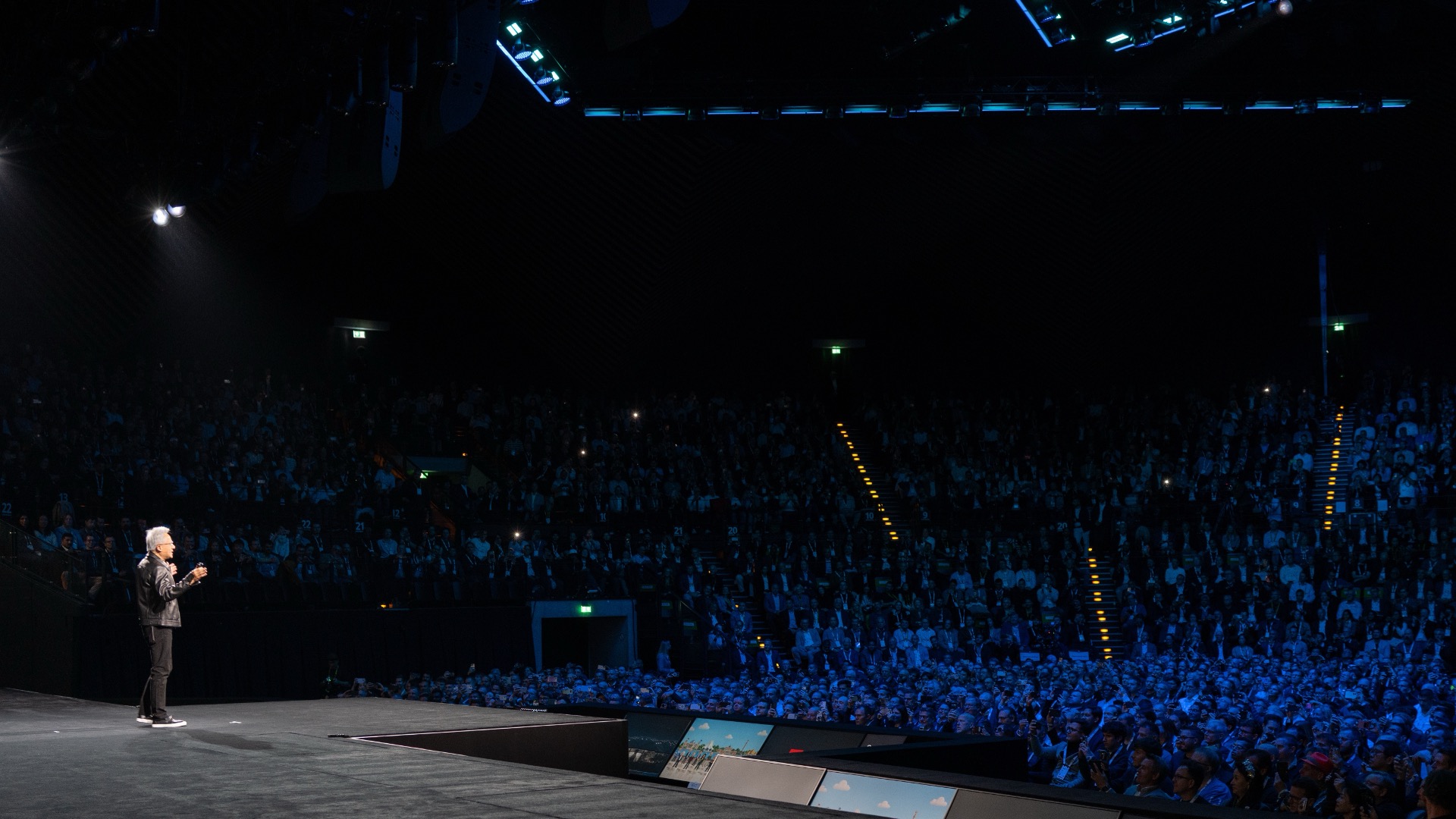
NVIDIA GTC Berlin 2026: Jensen Huang’s AI Vision Unveiled
NVIDIA CEO Jensen Huang delivered a landmark keynote at GTC Berlin, announcing a $10 billion European AI investment, a refreshed full‑stack AI factory, and new collaborations with major European brands. The event signals a decisive push to make Europe a core hub for AI production, not just consumption.