ThinkSuiteHomeAboutProjectsAI News
All AI Tools →
Lead Generation
Content Marketing
Video StudioSoon
Voice AISoon
Image StudioSoon
Contact
HomeAI NewsMicrosoftNVIDIA Vera Rubin: Gigascale AI Performa...
MicrosoftImpact: 83/100

NVIDIA Vera Rubin: Gigascale AI Performance, Unprecedented Efficiency

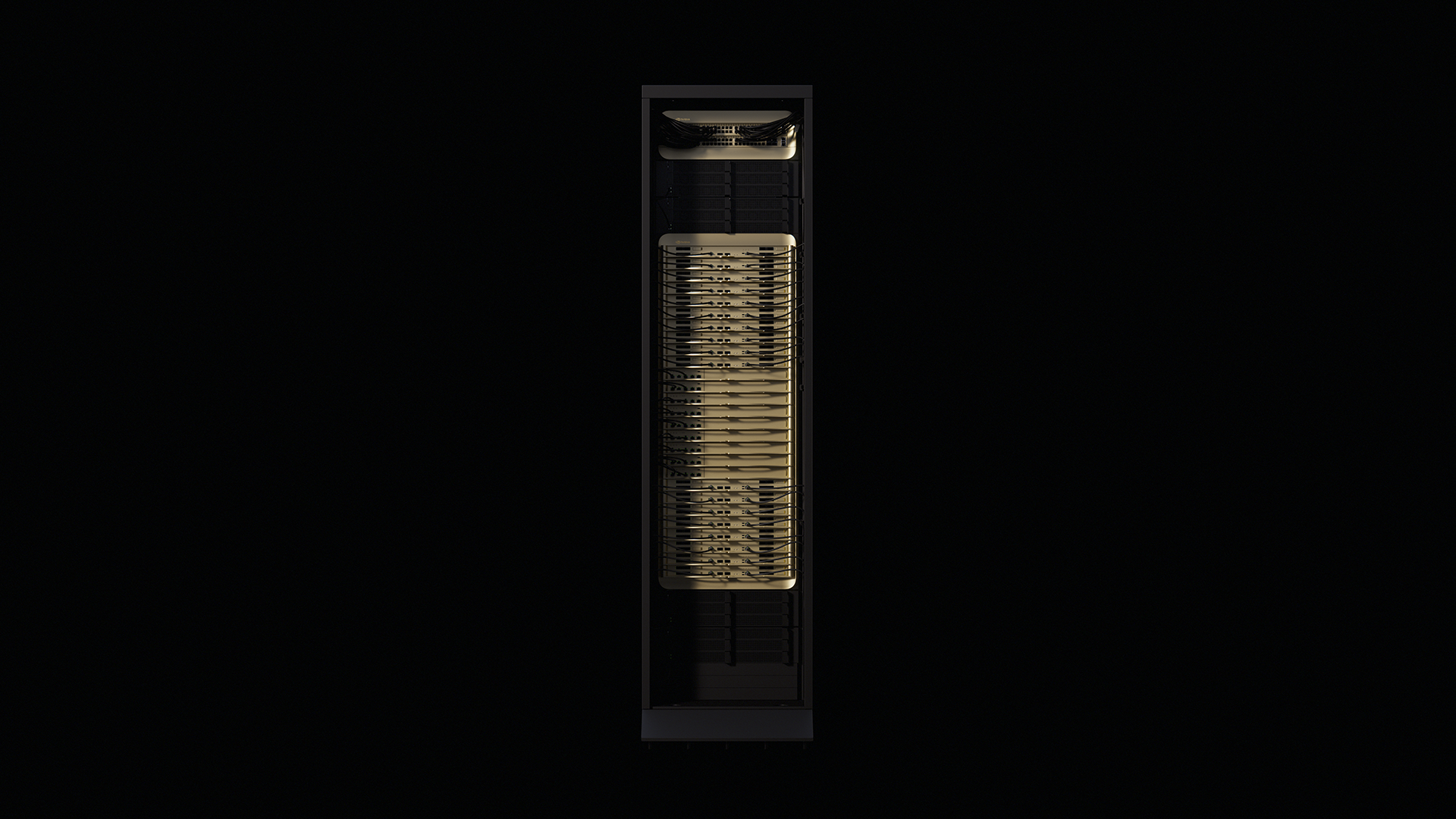
NVIDIA has launched its Vera Rubin NVL72 platform, promising unparalleled performance per watt and the lowest token cost for AI factories. This new architecture, built on extreme codesign, delivers a 10x throughput per megawatt improvement over previous generations, addressing critical power constraints in the rapidly expanding AI infrastructure.

NVIDIA Vera Rubin: Gigascale AI Performance, Unprecedented Efficiency
📷 Image: NVIDIA Blog

Key Highlights

  • NVIDIA Vera Rubin NVL72 platform launched, ramping up production with major cloud partners.
  • Delivers 10x more throughput per megawatt than Grace Blackwell NVL72, addressing power constraints.
  • Built on 'extreme codesign' across seven chips and five rack trays for holistic performance.
  • Features custom Vera CPU with Olympus core, offering 2x single-threaded performance for agentic AI.
  • Advanced networking with sixth-gen NVLink and Spectrum-X Ethernet ensures superior data flow and low latency.

# NVIDIA Vera Rubin: Ushering in an Era of Gigascale AI Efficiency

Introduction

The artificial intelligence landscape is evolving at an unprecedented pace, driven by the insatiable demand for more powerful, efficient, and scalable compute. At the heart of this revolution is the relentless pursuit of performance, particularly as AI models grow in complexity and size. NVIDIA, a perennial leader in accelerating AI, has once again raised the bar with the introduction of its Vera Rubin NVL72 platform. This isn't just another incremental update; it's a foundational shift designed to power the next generation of AI factories, delivering on the critical metrics of performance per watt and token cost, especially for the burgeoning agentic AI workloads.

What Happened

NVIDIA officially announced the launch and ramping production of its Vera Rubin NVL72 platform, signaling a significant leap forward in AI infrastructure. The company highlighted that Vera Rubin is engineered for "gigascale" operations, with production already underway and racks being deployed at major cloud partners including CoreWeave, Google Cloud, Microsoft Azure, and Oracle Cloud Infrastructure. This widespread adoption from leading providers underscores the immediate relevance and anticipated impact of the new platform.

The core message is clear: Vera Rubin is built from "chip to grid" to achieve the highest performance per watt and the lowest token cost. These metrics are paramount for modern AI development, particularly for power-constrained environments. A compelling benchmark from CoreWeave showcased Vera Rubin's capabilities, demonstrating 10x more throughput per megawatt than Grace Blackwell NVL72 on a DeepSeek-R1 benchmark. This dramatic improvement directly addresses the most pressing challenges faced by AI operators today.

Key Details

The Vera Rubin platform's capabilities stem from several key innovations and strategic deployments:

  • Gigascale Production: The platform is designed for massive scale, with its production ramping up to meet global demand.
  • Cloud Partner Integration: Vera Rubin NVL72 racks are being deployed across top-tier cloud providers:

* CoreWeave

* Google Cloud

* Microsoft Azure

* Oracle Cloud Infrastructure

  • Unprecedented Supply Chain: NVIDIA boasts the largest and most mature rack-scale supply chain ever assembled, spanning over 350 factory sites in 30 countries, ensuring robust availability.
  • Core Performance Metrics: The platform's primary objectives are:

* Highest performance per watt

* Lowest token cost

  • Benchmark Validation: CoreWeave's initial benchmark on DeepSeek-R1 revealed a 10x increase in throughput per megawatt compared to the Grace Blackwell NVL72, highlighting its efficiency gains.
  • First Adopters: Beyond cloud partners, leading AI infrastructure builders like CoreWeave, Microsoft, SpaceXAI, and Tesla are among the first to integrate Vera Rubin into their operations.

Technical Analysis

The extraordinary performance of NVIDIA Vera Rubin is not merely a sum of its parts but a testament to "extreme codesign". This philosophy involves engineering multiple components as a single, cohesive system rather than assembling disparate off-the-shelf products. The Vera Rubin platform integrates seven chips and five rack trays, working in concert:

  • Vera Rubin NVL72: The core compute platform.
  • Vera CPU Rack: At the heart of the system, this redefines the AI factory CPU. It features a custom Olympus core designed for the "agent era," delivering:

* 2x single-threaded performance

* 3x core-to-core bandwidth

* 40% lower memory latency versus competing chiplet designs.

This makes it exceptionally efficient for the single-threaded, highly interactive workloads typical of agentic AI.

  • Groq 3 LPX: Likely a specialized processing unit, though its specific role isn't detailed in the provided content, it's integral to the codesign.
  • Spectrum-6 SPX: Part of the advanced networking fabric.
  • Vera BlueField-4 STX: Likely a data processing unit (DPU) or network interface card (NIC) providing advanced networking, security, and storage acceleration.

Accelerating AI Factories With Purpose-Built Networking:

The platform's networking capabilities are equally revolutionary:

  • Sixth-Generation NVLink: For scale-up architectures, NVLink provides:

* More than 2x throughput on complex workloads.

* 3x lower latency.

* 10x higher packet rates than off-the-shelf Ethernet, crucial for tightly coupled multi-GPU systems.

  • Spectrum-X Ethernet: For scale-out deployments, Spectrum-X combines several cutting-edge technologies:

* 102.4T Spectrum-6 switch systems.

* 1.6T ConnectX-9 SuperNICs.

* Adaptive routing.

* Advanced congestion control.

* Telemetry.

* Open operating system support.

This combination enables 1.6x higher RDMA bandwidth than generic Ethernet solutions, ensuring efficient data flow across vast AI clusters.

This holistic, codesigned approach, from CPU to networking, is what allows Vera Rubin to achieve its unprecedented efficiency and performance gains, particularly in power-constrained environments.

Industry Impact

NVIDIA Vera Rubin's arrival marks a pivotal moment for the AI industry, particularly for those operating at gigascale. The focus on performance per watt and lowest token cost directly addresses the two most critical bottlenecks facing AI factories today: power consumption and operational expenditure. As AI models become larger and more complex, the energy required to train and run them escalates dramatically. Vera Rubin's 10x efficiency improvement per megawatt is not just an incremental gain; it's a transformative shift that can significantly reduce the environmental footprint and operational costs of large-scale AI deployments.

For cloud providers like Microsoft Azure, Google Cloud, CoreWeave, and Oracle Cloud Infrastructure, Vera Rubin enables them to offer more compute with less power, translating into competitive advantages, higher margins, and the ability to serve a broader range of customers, especially those with demanding AI workloads. For enterprises, this means access to more powerful and cost-effective AI inference and training, accelerating their AI initiatives. The "agent era" is cited as a key driver, suggesting that the platform is optimized for the emerging class of autonomous AI agents that require highly efficient, low-latency processing.

Future Implications

The implications of Vera Rubin extend far beyond immediate performance gains. This platform sets a new standard for sustainable AI infrastructure. By optimizing for power efficiency, NVIDIA is not only enabling more powerful AI but also contributing to a more environmentally responsible approach to AI development. The extreme codesign methodology employed by NVIDIA is likely to become a blueprint for future hardware development, pushing other manufacturers to adopt a more integrated, system-level approach to achieve similar breakthroughs.

Furthermore, the focus on the "agent era" hints at the types of workloads that will dominate the next wave of AI. As AI systems become more autonomous, interactive, and capable of complex reasoning, the demand for CPUs optimized for single-threaded performance and low latency, coupled with high-throughput networking, will only intensify. Vera Rubin positions NVIDIA at the forefront of this evolution, ensuring that the hardware infrastructure can keep pace with the rapid advancements in AI software and applications. This will likely accelerate the deployment of sophisticated AI agents across various industries, from robotics and autonomous vehicles to advanced enterprise automation and scientific discovery.

Why It Matters

For **developers**, Vera Rubin means access to significantly more powerful and efficient compute resources. This translates to faster model training, more complex model architectures, and lower inference latency for real-time AI applications. The platform's optimization for agentic workloads will empower developers to build and deploy sophisticated AI agents with unprecedented responsiveness and capability, pushing the boundaries of what AI can achieve. For **businesses**, the impact is profound. The 'lowest token cost' and 'highest performance per watt' directly reduce the operational expenses associated with running large-scale AI. This makes advanced AI more accessible and cost-effective, allowing companies to accelerate their digital transformation, build competitive AI-driven products, and derive greater insights from their data without incurring prohibitive infrastructure costs. Cloud providers can offer more competitive pricing and services, while enterprises can scale their AI initiatives more sustainably. For the broader **AI industry**, Vera Rubin sets a new benchmark for efficiency and performance. It addresses the critical challenge of power consumption, making AI development more sustainable and scalable. The 'extreme codesign' approach also highlights a trend towards highly integrated, purpose-built hardware, which will likely drive innovation across the entire AI hardware ecosystem and accelerate the transition into the 'agent era' of AI.

📈

Market Impact

The introduction of NVIDIA Vera Rubin will significantly impact the AI market by raising the bar for compute efficiency and scale. For cloud providers, it offers a distinct competitive advantage, allowing them to attract customers with demanding AI workloads seeking optimal performance-per-dollar and per-watt. This could lead to increased market share for early adopters of Vera Rubin in the cloud space. Competitors like AMD and Intel, while making strides, will face intensified pressure to deliver comparable rack-scale, codesigned solutions that can match Vera Rubin's efficiency benchmarks. The investment landscape will likely see a renewed focus on companies that can effectively deploy and utilize such advanced infrastructure, particularly those involved in AI factory operations or developing applications for the 'agent era'. This could also spur investment in renewable energy solutions and advanced cooling technologies to support these increasingly dense and powerful AI clusters.

💻

Developer Impact

For developers and technical teams, NVIDIA Vera Rubin offers a powerful new canvas for innovation. The significant boost in performance per watt means that training larger, more complex models becomes more feasible and cost-effective. Developers working on real-time AI applications, such as autonomous systems, interactive agents, and low-latency inference, will find the platform's optimized Vera CPU and advanced networking (NVLink, Spectrum-X) particularly beneficial. Lower memory latency and higher bandwidth will allow for more efficient data processing and inter-GPU communication, reducing bottlenecks that often plague large-scale AI projects. This will empower teams to iterate faster, experiment with novel architectures, and push the boundaries of AI capabilities, particularly in areas requiring highly responsive and resource-intensive computations.

🔮

Future Prediction

In the next 30 days, we'll see more detailed benchmarks from CoreWeave and other early adopters, showcasing Vera Rubin's capabilities across a wider range of AI models and workloads, solidifying its performance claims. Within 90 days, expect major cloud providers like Microsoft Azure and Google Cloud to announce specific Vera Rubin instances and pricing, making the platform accessible to a broader enterprise audience, potentially driving a surge in AI project starts focused on efficiency. Over the next 180 days, the 'extreme codesign' methodology will become a prominent talking point, influencing competing hardware vendors' strategies, and we'll likely see the first public demonstrations of advanced AI agents explicitly leveraging Vera Rubin's architecture for unprecedented real-time performance, further accelerating the 'agent era' of AI.

NVIDIA's Vera Rubin platform represents a strategic masterstroke, solidifying their dominance in the AI infrastructure market. The emphasis on 'performance per watt' and 'lowest token cost' is a direct response to the industry's most pressing concerns: the escalating energy demands and operational costs of AI at scale. By achieving a 10x improvement in throughput per megawatt, NVIDIA is not just offering a faster chip; they are offering a fundamentally more sustainable and economically viable path to scaling AI. The 'extreme codesign' approach, integrating a custom Vera CPU with specialized networking and processing units, demonstrates NVIDIA's capability to innovate beyond the GPU. The Vera CPU, with its Olympus core, specifically targets the 'agent era'—a recognition that future AI will be less about monolithic models and more about interconnected, autonomous agents requiring high single-threaded performance and low latency. This foresight positions NVIDIA to capture the next wave of AI compute demand. Opportunities arise for companies building power-efficient data centers, as well as those developing AI agents and real-time AI applications that can fully leverage Vera Rubin's low-latency, high-throughput capabilities. The widespread adoption by major cloud providers further de-risks deployment for enterprises. A potential risk, however, lies in the increasing complexity and proprietary nature of such highly integrated systems, which could create vendor lock-in and challenge open-source alternatives. Competitors will face immense pressure to match this level of codesign and efficiency, potentially leading to further consolidation in the high-end AI hardware market.

ThinkSuite AI Analysis

Frequently Asked Questions

What is NVIDIA Vera Rubin?

NVIDIA Vera Rubin is a new gigascale AI computing platform (NVL72) designed to deliver the highest performance per watt and lowest token cost for AI factories, especially for agentic AI workloads. It's built on a foundation of extreme codesign across multiple chips and networking components.

How much more efficient is Vera Rubin compared to previous generations?

According to CoreWeave's benchmark on DeepSeek-R1, Vera Rubin delivers 10x more throughput per megawatt than the Grace Blackwell NVL72 platform, representing a significant leap in power efficiency.

Which cloud providers are deploying Vera Rubin?

NVIDIA Vera Rubin NVL72 production is ramping up with racks running at partners CoreWeave, Google Cloud, Microsoft Azure, and Oracle Cloud Infrastructure.

Sources

NVIDIA Blog

Want AI intelligence for your business?

ThinkSuite builds AI-powered systems, automation, and custom tools for forward-thinking companies.

Talk to Us →