ThinkSuiteHomeAboutProjectsAI News
All AI Tools →
Lead Generation
Content Marketing
Video StudioSoon
Voice AISoon
Image StudioSoon
Contact
HomeAI NewsNVIDIANVIDIA & Japan Ignite Full-Stack AI Robo...
NVIDIAImpact: 83/100

NVIDIA & Japan Ignite Full-Stack AI Robotics: The Dawn of Personal AI

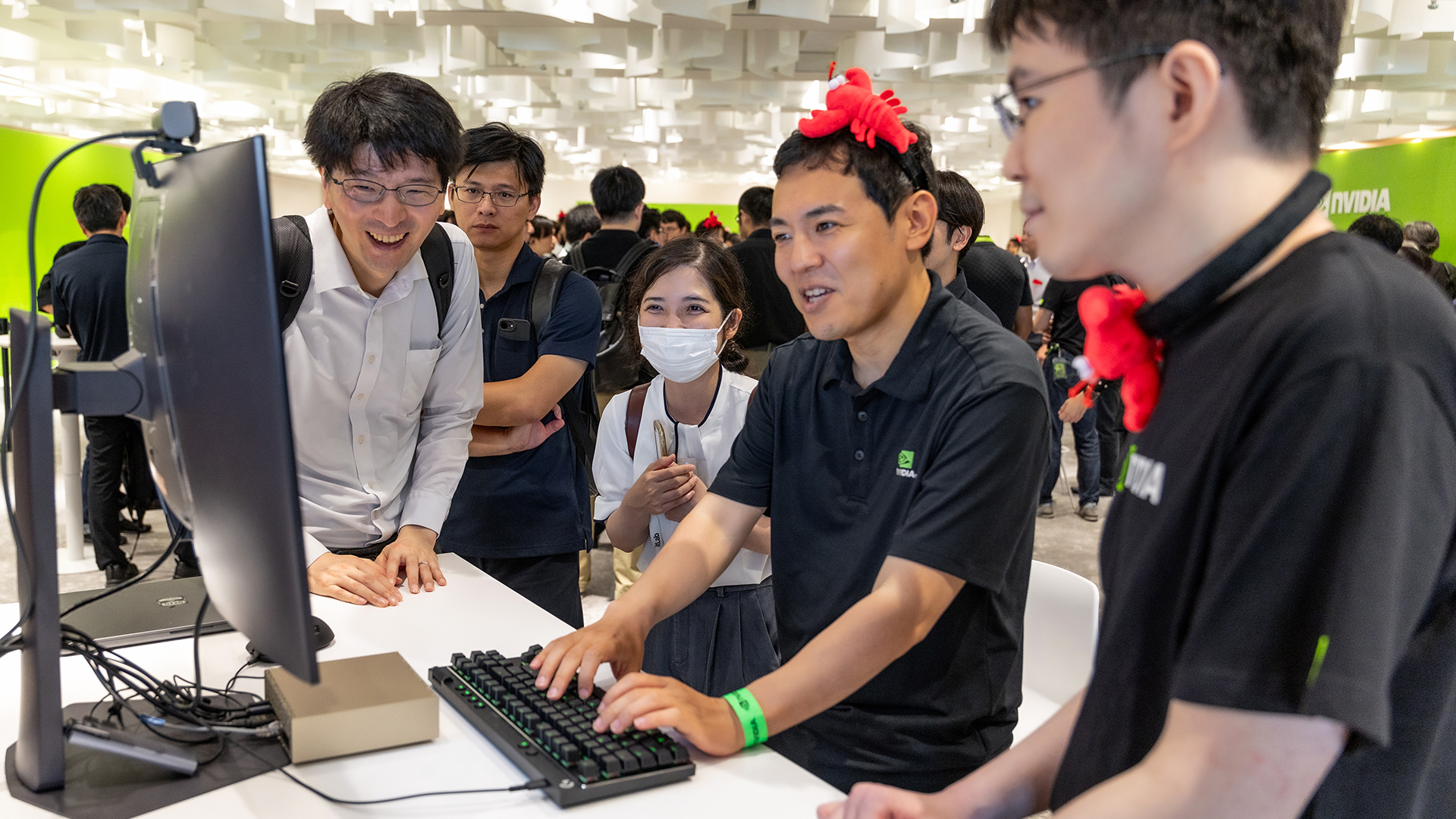
NVIDIA CEO Jensen Huang's recent visit to Japan underscored a major push towards integrating full-stack AI and robotics into every industry, emphasizing the concept of 'personal AI.' At the 'Build-a-Claw' event, developers showcased physical AI agents built with open models and NVIDIA's platform, signaling a new era for intelligent automation.

NVIDIA & Japan Ignite Full-Stack AI Robotics: The Dawn of Personal AI
📷 Image: NVIDIA Blog

Key Highlights

  • NVIDIA and Japan deepen collaboration on full-stack AI and robotics.
  • Jensen Huang introduces the concept of 'personal AI' agents.
  • Developers showcase physical AI robots at the 'Build-a-Claw' event.
  • Emphasis on open models and NVIDIA's platform for robotics innovation.
  • DGX Spark personal AI supercomputers given to empower builders.

NVIDIA and Japan: Forging the Future of Full-Stack AI and Robotics

Japan, a global powerhouse known for its manufacturing prowess, robotics innovation, and vibrant tech ecosystem, is at the forefront of a new AI revolution. This week, NVIDIA reinforced its deep commitment to this burgeoning landscape, showcasing a powerful collaboration with Japanese partners aimed at bringing full-stack AI and robotics to every industry. The highlight of this strategic alliance was the unexpected and impactful visit of NVIDIA founder and CEO Jensen Huang, who personally engaged with builders and innovators, heralding the advent of 'personal AI.'

What Happened: Jensen Huang's Surprise Visit and the 'Build-a-Claw' Event

The buzz in Tokyo was palpable as NVIDIA's leadership, including Jensen Huang, converged with Japan's AI elite. Yet, Huang's first stop wasn't a formal press conference or a high-level corporate meeting. Instead, he made a surprise visit to a dynamic 'Build-a-Claw' event held at Studio Koku, nestled within the serene Happo-en traditional Japanese garden.

Here, a room full of enthusiastic developers was deep in the throes of physical AI experimentation. Using open models and NVIDIA's comprehensive platform, these innovators were building and refining robots capable of performing complex pick-and-place tasks. Huang's unannounced arrival transformed the event into an unforgettable moment, as he walked the floor, conversing directly with the creators, witnessing the technology in action, and sharing his profound vision for the future.

“Forty years ago was the beginning of the PC revolution. Now, forty years later, instead of a personal computer, you can now have your own personal AI,” Huang declared, capturing the essence of this transformative shift. He further demonstrated his commitment by giving away autographed NVIDIA DGX Spark personal AI supercomputers to lucky participants, underscoring the accessibility of powerful AI tools for individual builders. This event vividly illustrated NVIDIA’s physical AI platform in practice: a seamless integration of intelligent models, responsive hardware, and human ingenuity.

Key Details: Japan's Central Role in NVIDIA's Physical AI Strategy

NVIDIA's engagement in Japan is not merely about market expansion; it's a strategic alliance built on shared vision and complementary strengths. Key aspects include:

  • Full-Stack AI Development: Japan is actively building across the entire AI stack, leveraging NVIDIA's hardware (GPUs, Jetson, DGX systems) and software platforms (CUDA, cuDNN, Isaac Sim, Omniverse).
  • Physical AI Platform: The 'Build-a-Claw' event showcased the practical application of NVIDIA's physical AI platform, enabling robots to perceive, reason, and act in the real world.
  • Open Model Ecosystem: Japan's vibrant open model ecosystem is a critical component of NVIDIA's global physical AI strategy, fostering collaboration and accelerating innovation.
  • 'Personal AI' Vision: Jensen Huang articulated a future where individuals can build and deploy their own AI agents, much like the personal computer revolution, democratizing advanced AI capabilities.
  • DGX Spark: The giveaway of personal AI supercomputers highlights NVIDIA's commitment to empowering individual developers and researchers with cutting-edge tools.

Technical Analysis: The Architecture of Physical AI

NVIDIA's full-stack approach to AI is the bedrock of this physical AI revolution. At its core, it involves a sophisticated interplay of hardware, software, and models:

  • Hardware Foundation: From powerful data center GPUs (like those in DGX systems) for training complex models to edge AI devices (like NVIDIA Jetson) for real-time inference on robots, NVIDIA provides the computational backbone.
  • Software Stack: The CUDA parallel computing platform remains indispensable, alongside specialized libraries for deep learning (cuDNN) and robotics (Isaac ROS, Isaac Sim). NVIDIA Omniverse serves as a crucial platform for simulating virtual worlds, allowing developers to train and test AI models for robotics in highly realistic, synthetic environments before deployment in the physical world.
  • Open Models: The emphasis on open models is a strategic move. Open-source AI models accelerate development by providing readily available, customizable building blocks for robotic intelligence. These models, often fine-tuned on vast datasets, enable robots to perform tasks like object recognition, manipulation, and navigation with increasing autonomy and precision.
  • Physical AI Agents: The 'Build-a-Claw' robots are tangible examples of physical AI agents. These agents combine perception (via sensors and cameras), reasoning (via AI models running on NVIDIA hardware), and action (via robotic manipulators). The goal is to create intelligent systems that can learn from their environment, adapt to new situations, and perform tasks autonomously, moving beyond simple programmed automation.

Industry Impact: Reshaping Manufacturing and Beyond

This initiative holds profound implications for numerous industries, particularly in Japan and globally:

  • Manufacturing and Logistics: Japan's leading manufacturers stand to gain immensely. Enhanced robotics, powered by advanced AI, will drive unprecedented levels of automation, efficiency, and flexibility in production lines, assembly, and supply chain management. This can lead to reduced costs, increased output, and higher quality control.
  • Healthcare and Services: Physical AI agents could revolutionize tasks in healthcare (e.g., assisting with surgeries, delivering supplies) and service industries (e.g., smart retail, hospitality), addressing labor shortages and improving service delivery.
  • Research and Development: By democratizing access to powerful AI tools and open models, NVIDIA and Japan are accelerating R&D in robotics, fostering a new generation of innovators and breakthroughs.
  • Competitive Edge: For Japanese industries, this collaboration provides a significant competitive advantage, positioning them at the forefront of the global AI and robotics landscape.

Future Implications: The Democratization of Intelligent Agents

Jensen Huang's vision of 'personal AI' is not just a catchy phrase; it represents a fundamental shift in how we interact with and develop intelligent systems. Just as the personal computer empowered individuals to create and innovate, personal AI agents, built on robust platforms like NVIDIA's, promise to bring sophisticated AI capabilities into the hands of a broader audience. This democratizes the creation of intelligent systems, moving beyond large corporations and specialized labs.

This push into physical AI, particularly with the emphasis on open models, paves the way for a future where custom-built, intelligent robots can address highly specific needs across diverse sectors. It signifies a future where AI isn't confined to data centers or virtual spaces but actively operates and learns within our physical world, transforming everything from industrial processes to daily life. The collaboration between NVIDIA and Japan is a critical step towards realizing this highly intelligent, interconnected future.

Why It Matters

This collaboration between NVIDIA and Japan marks a pivotal moment in the evolution of AI and robotics. For **developers**, it signifies unprecedented access to powerful, full-stack tools and open models, lowering the barrier to entry for building sophisticated physical AI agents. The 'personal AI' vision empowers individual innovators to create intelligent solutions, fostering a new wave of creativity and problem-solving in robotics. For **businesses**, particularly in manufacturing, logistics, and services, this initiative promises a significant leap in automation and efficiency. The integration of advanced AI into physical robots will drive productivity, reduce operational costs, and unlock new possibilities for product development and service delivery, providing a crucial competitive edge in a rapidly evolving global market. It also addresses critical issues like labor shortages through intelligent automation. For the broader **AI industry**, this strengthens the narrative around physical AI and the practical application of AI in the real world. NVIDIA's full-stack approach, combined with Japan's industrial prowess, validates the potential of intelligent robots to transform industries, pushing the boundaries of what's possible and solidifying NVIDIA's position as a leader not just in data center AI, but also in the burgeoning field of real-world intelligent agents.

📈

Market Impact

This development is poised to significantly impact the AI and robotics market. We can expect increased demand for NVIDIA's AI hardware, including GPUs, Jetson platforms, and potentially the DGX Spark for individual developers and small to medium-sized enterprises. This will likely fuel investment in AI-powered automation startups and established robotics companies adopting NVIDIA's stack. Competitors in the industrial automation and robotics space will face pressure to integrate more advanced AI capabilities, potentially leading to partnerships or acquisitions. The emphasis on open models could also shift market dynamics, encouraging more collaborative development rather than proprietary solutions, ultimately accelerating the overall growth of the physical AI market.

💻

Developer Impact

For developers and technical teams, this news opens up exciting new frontiers. The availability of powerful tools like the DGX Spark and the emphasis on open models within NVIDIA's full-stack platform significantly lowers the barrier to entry for developing sophisticated physical AI and robotics applications. Developers can expect enhanced support, more robust simulation environments (like Isaac Sim and Omniverse), and a growing community focused on real-world AI challenges. This will drive innovation in areas like robotic manipulation, autonomous navigation, and human-robot interaction, creating new career opportunities and skill requirements in physical AI engineering.

🔮

Future Prediction

Within 30 days, we anticipate a surge in developer interest and initial project announcements leveraging NVIDIA's physical AI platforms and DGX Spark, particularly within Japan's tech community. Over the next 90 days, expect to see early-stage prototypes and proof-of-concepts of 'personal AI' agents emerging, demonstrating novel applications in specific industrial or service contexts. By 180 days, the market will likely witness increased commercial partnerships and potentially initial pilot deployments of these advanced AI-powered robots, particularly in sectors like smart manufacturing and logistics, solidifying Japan's role as a key innovation hub for physical AI.

NVIDIA's strategic deepening of ties with Japan is a brilliant move, leveraging Japan's unparalleled expertise in manufacturing and robotics to accelerate the adoption of its physical AI platform. The 'personal AI' narrative, championed by Jensen Huang, is a potent psychological framework designed to democratize advanced AI beyond corporate labs, potentially sparking a 'maker' movement for intelligent agents. Technically, the focus on open models is crucial; it fosters a collaborative ecosystem, reduces vendor lock-in perceptions, and allows for rapid iteration and specialization of robotic behaviors. This initiative solidifies NVIDIA's position as the foundational technology provider for the entire AI stack, from cloud to edge to physical robots. However, challenges remain, including the complexity of real-world deployment, safety and ethical considerations for autonomous physical agents, and the need for robust, scalable training data for open models to reach their full potential. Competition from other robotics platforms and specialized hardware providers will also intensify, but NVIDIA's comprehensive ecosystem offers a significant advantage.

ThinkSuite AI Analysis

Frequently Asked Questions

What does 'personal AI' mean in this context?

Jensen Huang's 'personal AI' refers to the ability for individuals and small teams to build and deploy their own specialized AI agents, particularly physical robots, using accessible tools and powerful computing platforms like NVIDIA's DGX Spark, akin to how personal computers revolutionized computing for individuals.

Why is Japan a key focus for NVIDIA's physical AI strategy?

Japan is a global leader in manufacturing and robotics, with a strong ecosystem of infrastructure builders and technology pioneers. This makes it an ideal partner for NVIDIA to advance its full-stack physical AI platform, leveraging Japan's industrial expertise and innovative spirit to develop and deploy intelligent robots across various industries.

What is the 'Build-a-Claw' event?

The 'Build-a-Claw' event was a developer workshop in Tokyo where participants used NVIDIA's platform and open models to build and program robotic claws capable of picking up objects. It served as a practical demonstration of NVIDIA's physical AI platform and the potential for creating intelligent robotic agents.

Sources

NVIDIA Blog

Want AI intelligence for your business?

ThinkSuite builds AI-powered systems, automation, and custom tools for forward-thinking companies.

Talk to Us →