# Built in Fort Worth: Wistron Ignites U.S. AI Manufacturing with NVIDIA Superchips
The AI revolution is no longer just about algorithms and data centers; it's increasingly about the physical infrastructure that powers it. In a landmark move, Wistron, a leading technology manufacturer, has officially opened its first U.S. manufacturing facility in Fort Worth, Texas. This state-of-the-art plant is poised to become a cornerstone of America's AI future, producing the advanced NVIDIA AI systems that are essential for the next generation of artificial intelligence.
What Happened: A New Dawn for Domestic AI Production
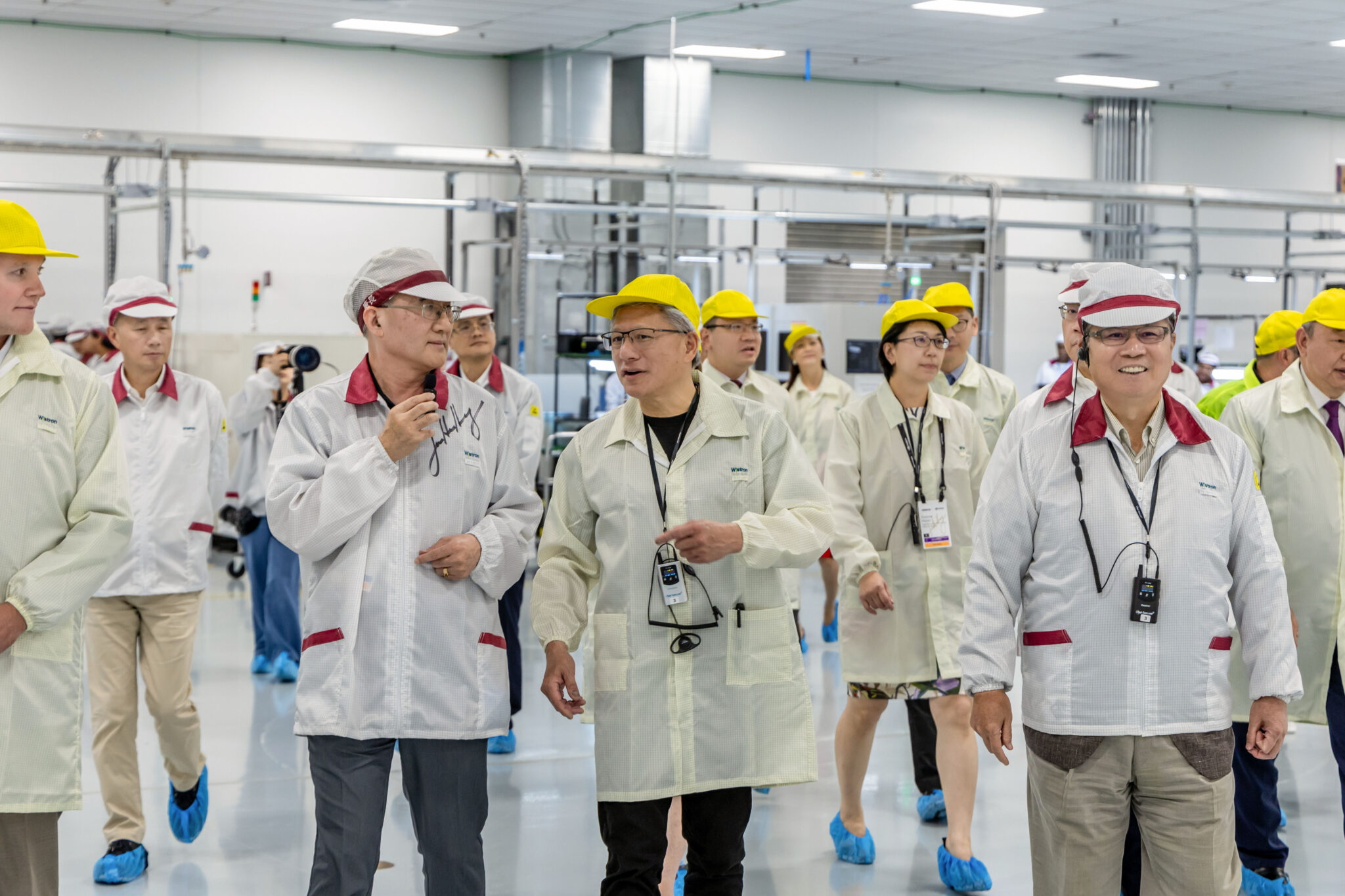
On a significant day for both U.S. manufacturing and the global AI industry, Wistron unveiled its D1 facility in Fort Worth, a sprawling 324,000-square-foot greenfield plant. The ceremony drew a distinguished audience, including Wistron executives, Taiwan government officials, and local Fort Worth leaders. Central to the event was the presence of NVIDIA founder and CEO Jensen Huang, who shared the stage with Wistron Chairman Simon Lin, emphasizing the profound implications of building AI infrastructure on American soil.
Huang underscored the strategic importance of this development, stating, "Manufacturing is an essential pillar for every economy and every country. Building chip plants, packaging plants, computer system plants like this, and AI factories all over the United States, has allowed the United States to really reindustrialize for the first time in a long time." His words highlight a broader trend towards strengthening domestic supply chains and creating resilient manufacturing capabilities within the U.S.
Key Details: Powering the AI Era from Texas
The Wistron D1 facility is not just any manufacturing plant; it's a dedicated hub for some of the most advanced AI hardware in the world. Here are the critical facts:
- Location: Fort Worth, Texas, marking Wistron's inaugural manufacturing presence in the U.S.
- Size: A substantial 324,000-square-foot greenfield plant, designed for high-volume production.
- Product Focus: The plant currently operates two manufacturing cells:
* One dedicated to producing the NVIDIA GB300 Grace Blackwell Ultra Superchip, a foundational component for next-generation AI systems.
* Another cell is slated to produce the upcoming NVIDIA Vera Rubin Superchip, indicating a commitment to future-proofing AI infrastructure.
- Production Scale: The facility is rapidly scaling up, with plans to produce tens of thousands of boards per month of these cutting-edge technologies by the end of the year.
- Investment: This venture represents a substantial $700 million commitment to advanced manufacturing in the U.S.
- Job Creation: The plant has already generated over 500 new jobs across various sectors, including plumbing, construction, manufacturing, and electrical work, with projections to expand to 1,000 jobs by the close of the year.
- Strategic Vision: The initiative underscores the necessity of a robust domestic manufacturing base, complete with factories, resilient supply chains, and a skilled workforce, to build AI at scale and adapt to rapid technological advancements.
Technical Analysis: The Superchips Driving the Future
The NVIDIA GB300 Grace Blackwell Ultra Superchip and the forthcoming Vera Rubin Superchip are at the vanguard of AI computation. The GB300, part of the Blackwell platform, integrates multiple powerful GPUs and CPUs to handle unprecedented scales of AI model training and inference. Its architecture is designed to accelerate trillion-parameter models, crucial for advanced generative AI, large language models (LLMs), and scientific simulations.
Producing these complex systems requires sophisticated manufacturing processes, stringent quality control, and a highly skilled technical workforce. The Fort Worth plant's ability to scale to tens of thousands of boards per month signifies Wistron's advanced manufacturing capabilities and NVIDIA's confidence in this domestic production line. This move ensures a more localized and potentially more secure supply of critical AI hardware, reducing reliance on single geographic regions and mitigating potential supply chain disruptions.
Industry Impact: Re-industrializing America for AI
Wistron's investment and the establishment of this plant in Texas carry immense implications for the broader tech and AI industries. It’s a powerful testament to the ongoing trend of re-shoring manufacturing, particularly for strategic technologies like AI. This initiative directly addresses concerns about supply chain vulnerabilities exposed in recent years and aligns with governmental efforts to bolster domestic technological independence.
- Supply Chain Resilience: Localized production of critical AI components reduces geopolitical risks and transportation costs, ensuring a more stable and predictable supply chain for U.S. companies and researchers.
- Economic Revitalization: The creation of hundreds, soon to be thousands, of high-skill and support jobs injects significant economic vitality into the Fort Worth region and the broader Texas economy. This extends beyond direct manufacturing roles to ancillary services and industries.
- Innovation Ecosystem: Having advanced manufacturing capabilities within the U.S. can foster tighter feedback loops between design, engineering, and production, potentially accelerating innovation cycles for NVIDIA and its partners.
- Strategic Advantage: For the U.S., this represents a critical step in maintaining its leadership in the global AI race by securing the foundational hardware necessary for cutting-edge AI development.
Future Implications: A Blueprint for Global AI Infrastructure
The Fort Worth plant sets a precedent and a potential blueprint for how advanced AI infrastructure can be developed and deployed globally. As AI becomes more ubiquitous, the demand for specialized hardware will only intensify. This move by Wistron and NVIDIA highlights a strategic shift towards distributed, resilient manufacturing capabilities that are closer to the end markets.
For businesses and governments worldwide, this serves as a case study in building robust, localized AI ecosystems. It emphasizes that true AI leadership requires not just software prowess but also a strong, adaptable hardware manufacturing base. The success of this facility could encourage similar investments in other strategic regions, further diversifying and strengthening the global AI supply chain.
This commitment to advanced manufacturing in the U.S. is a clear signal that the AI era demands a robust, integrated approach, from chip design to final system assembly, all within a resilient and adaptive industrial framework.
*
Key Highlights
- Wistron opens first U.S. manufacturing plant in Fort Worth, Texas.
- Facility to produce NVIDIA GB300 Grace Blackwell Ultra and Vera Rubin AI superchips.
- $700 million investment creating 500+ jobs, expanding to 1,000.
- Jensen Huang emphasizes U.S. re-industrialization for the AI era.
- Plant scaling to tens of thousands of advanced AI boards per month.
Why It Matters
For developers, this means more stable and potentially faster access to the cutting-edge NVIDIA hardware required to train and deploy the largest and most complex AI models. A localized supply chain can reduce lead times and ensure the availability of Grace Blackwell and Vera Rubin superchips, accelerating research and development cycles in generative AI, scientific computing, and autonomous systems. It fosters an environment where developers can push the boundaries of AI knowing the necessary computational backbone is readily available.
For businesses, Wistron's Fort Worth plant signifies a critical step towards supply chain resilience and strategic independence in the AI hardware sector. Companies relying on NVIDIA's advanced AI systems can anticipate greater stability in procurement, reduced exposure to geopolitical risks, and potentially more competitive pricing due to localized production efficiencies. This investment underpins the foundational infrastructure needed for enterprises to adopt and scale AI solutions with confidence, driving innovation and competitive advantage across industries.
For the AI industry as a whole, this is a powerful statement about the maturity and strategic importance of AI infrastructure. It marks a significant milestone in the re-industrialization of the U.S., positioning the nation as a key hub for advanced AI manufacturing. This move not only secures critical hardware supply but also stimulates economic growth, creates high-value jobs, and strengthens the overall AI ecosystem, ensuring the U.S. remains at the forefront of AI innovation and deployment.
Expert Analysis
Wistron's Fort Worth plant is more than just a factory; it's a strategic geopolitical and economic maneuver. From a geopolitical perspective, it significantly de-risks NVIDIA's supply chain by diversifying production away from potentially volatile regions, aligning with broader U.S. efforts to secure critical technology manufacturing domestically. This move could also influence other major tech manufacturers to consider similar investments, further solidifying the U.S. as a hub for advanced computing hardware. The opportunities are vast: job creation spanning various skill levels, stimulation of ancillary industries, and the potential for a more integrated design-to-production pipeline that could accelerate innovation. However, risks remain, particularly in talent acquisition for highly specialized manufacturing roles and navigating the complexities of establishing high-volume, high-precision production from scratch in a new region. The success of this plant will serve as a benchmark for future domestic advanced manufacturing initiatives.
Market Impact
This development is expected to have a multi-faceted impact on the AI market. Firstly, it will enhance the availability and potentially stabilize pricing for NVIDIA's top-tier AI superchips, which could intensify competition among AI solution providers who rely on such hardware. Secondly, it signals a growing trend of investment in domestic manufacturing for AI components, potentially attracting more capital into U.S.-based production facilities and related supply chain businesses. While it might not immediately disrupt NVIDIA's dominant market position, it strengthens its ecosystem by ensuring a robust supply. For competitors, it underscores the importance of secure and diverse supply chains, potentially prompting similar domestic investment strategies or partnerships to remain competitive in the rapidly expanding AI hardware landscape. The long-term effect could be a more geographically diversified and resilient global AI hardware market.
Developer Impact
For developers and technical teams, the Wistron plant represents a tangible step towards more reliable access to the bleeding edge of AI compute. The production of GB300 Grace Blackwell Ultra and Vera Rubin Superchips in the U.S. means potentially shorter lead times for these high-demand components, allowing for quicker iteration on AI models and faster deployment of new applications. This stability in hardware supply can reduce project delays and resource constraints, empowering developers to tackle more ambitious AI challenges. Furthermore, a localized manufacturing base could foster closer collaboration between hardware manufacturers and software developers, leading to optimized systems and new possibilities for AI innovation, from foundational model training to specialized edge AI deployments.
Future Prediction
Within 30 days, we'll see initial reports on the plant's operational ramp-up and early production output, alongside increased recruitment drives for the projected 1,000 jobs. Over the next 90 days, the plant will likely reach significant production milestones for the GB300, impacting NVIDIA's delivery timelines for key customers and potentially influencing Q3 earnings outlooks. By 180 days, the facility will be a fully operational, high-volume producer, potentially initiating production of the Vera Rubin Superchip, solidifying the U.S. as a critical hub for next-gen AI hardware manufacturing and inspiring further domestic investments across the AI supply chain.
FAQs
- Q1: What specific NVIDIA AI systems will Wistron's Fort Worth plant produce?
* A1: The plant will primarily produce the NVIDIA GB300 Grace Blackwell Ultra Superchip and is slated to also produce the NVIDIA Vera Rubin Superchip, both critical for advanced AI infrastructure.
- Q2: What is the total investment and job creation associated with this new facility?
* A2: Wistron has committed $700 million to this facility, creating over 500 new jobs initially, with plans to expand to 1,000 jobs by the end of the year.
- Q3: Why is domestic manufacturing of AI infrastructure important for the U.S.?
* A3: Domestic manufacturing enhances supply chain resilience, reduces geopolitical risks, creates high-value jobs, and strengthens the U.S.'s strategic position in the global AI race by ensuring access to critical hardware.